2026 Top Dimple Drain Sheets for Effective Water Management Solutions?
Effective water management solutions are crucial in today's infrastructure development. One key component in this area is the use of Dimple Drain Sheets. According to industry reports, these products have shown significant effectiveness in reducing water accumulation. They facilitate proper drainage, which in turn protects foundations and prevents soil erosion.
Recent studies indicate that improper drainage can lead to costly damages. Flooding can affect up to 25% of residential properties. Without adequate water management, homeowners face increased risks. Dimple Drain Sheets provide a practical solution, ensuring water flows away from critical areas.
However, the market is rife with options, and not all sheets perform equally. Some may fail under heavy rainfall. It’s essential to analyze performance metrics carefully. A wise choice can minimize long-term expenses, while poor decisions can lead to recurring issues. Understanding the specifications of Dimple Drain Sheets is vital in ensuring effective water management solutions.
Overview of Dimple Drain Sheets and Their Functionality
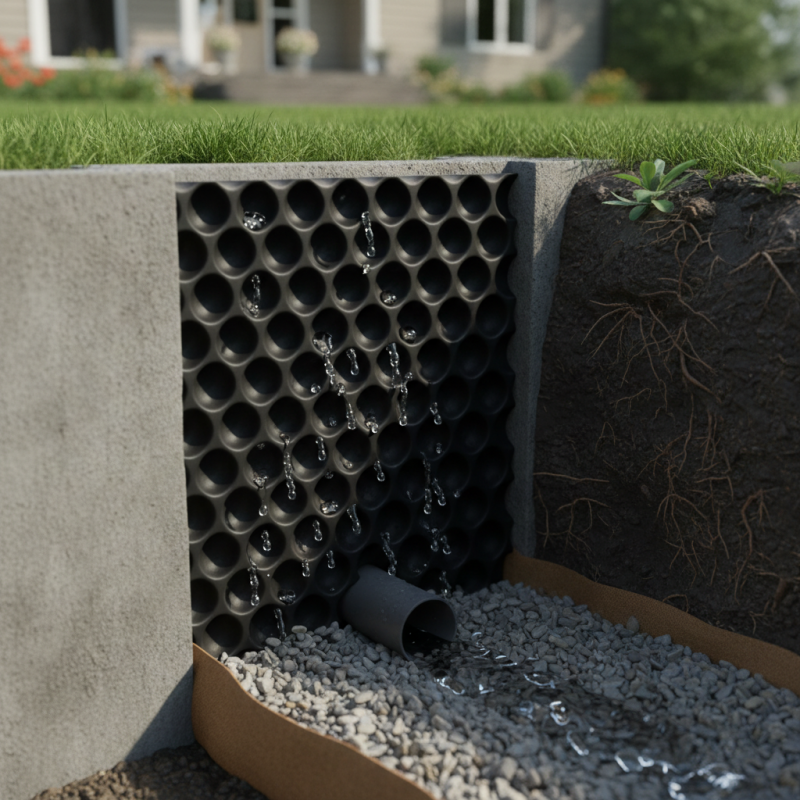
Dimple drain sheets are innovative materials designed for efficient water management. They play a crucial role in directing surface water away from structures. Comprised of durable, lightweight materials, these sheets feature a unique dimpled surface that channels water effectively. This design helps reduce soil erosion and prevent structural damage.
Their functionality extends beyond simple drainage. The dimples create air pockets that enhance drainage capabilities. This allows for proper water flow and minimizes standing water around foundations. However, installation can be tricky. Proper alignment and placement are essential for optimal performance. A poorly installed sheet may lead to water pooling, negating its benefits.
Moreover, while they are effective, they require ongoing maintenance. Over time, debris can accumulate in the dimples, affecting drainage efficiency. Regular inspections are necessary to ensure they function correctly. The investment in dimple drain sheets can be well worth it, but only if they are maintained properly. Users must remain vigilant about their effectiveness to maximize benefits.
2026 Top Dimple Drain Sheets for Effective Water Management Solutions
| Model |
Material |
Thickness (mm) |
Drainage Capacity (l/m²/h) |
Weight (kg/m²) |
Applications |
| Model A |
HDPE |
8 |
40 |
1.0 |
Foundation Drainage |
| Model B |
Polypropylene |
10 |
50 |
1.2 |
Retaining Walls |
| Model C |
Nylon |
6 |
30 |
0.8 |
Roof Drainage |
| Model D |
PVC |
12 |
60 |
1.5 |
Landscaping |
| Model E |
Geotextile |
5 |
20 |
0.6 |
Agricultural Fields |
Benefits of Using Dimple Drain Sheets in Water Management
Dimple drain sheets are becoming essential in modern water management. They are designed to efficiently drain water away from key areas. These sheets help prevent water accumulation, which can lead to serious structural issues. They also support various landscaping and construction projects.
The benefits of using dimple drain sheets are numerous. They enhance drainage efficiency, reducing the risk of water damage. When installed correctly, they can channel water quickly. This is critical in maintaining the integrity of buildings and landscapes. Their textured surface creates air gaps. These air pockets facilitate water movement away from foundations.
However, it's vital to consider the installation process. Improperly installed sheets can lead to water pooling. This can defeat their intended purpose. Homeowners and builders must evaluate their specific needs. Sometimes, a simple dimple drain sheet may not suffice. Different soil types and climates can affect their efficiency. Regular maintenance and checks are necessary. This ensures they perform as intended, safeguarding structures from water-related issues.
Water Management Efficiency with Dimple Drain Sheets
Top Features to Look for in Dimple Drain Sheets
When choosing dimple drain sheets for effective water management, certain features stand out. Durability is key. Look for materials that can withstand harsh weather. A strong sheet can last longer and require fewer replacements.
Drainage capacity is another vital aspect. The sheets should efficiently channel away excess water. This prevents pooling and potential damage. Consider the size of the dimples. Larger dimples may offer better drainage but can be less flexible.
Tips: Always check for compatibility with your existing systems. Not all sheets fit every scenario. Test samples before committing to a larger order to see how they perform in real conditions.
Ensure proper installation. Misalignment can reduce their effectiveness. Take the time to read installation guidelines closely. Small errors can lead to significant issues down the line. Water management is essential for the longevity of structures, so don't overlook these details.
Comparison of Leading Brands for Dimple Drain Sheets in 2026
In 2026, the market for dimple drain sheets is evolving rapidly, and effective water management solutions are essential for construction and landscaping. Dimple drain sheets provide drainage, protection, and waterproofing for various applications. Industry reports indicate a growing demand for these products, driven by increased awareness of water-related issues. Many builders seek reliable materials to prevent moisture damage and improve site sustainability.
When comparing leading brands, we see notable variations in performance and cost. Most dimple drain sheets feature a unique dimple design that maximizes water flow. Recent data suggests that products with higher dimple heights offer superior drainage performance. Some sheets specifically target specific soil types, allowing for better adaptation to site conditions.
Tips: Always consider climate impacts. Choosing the right dimple drain sheet can prevent long-term issues. Before making a purchase, assess the specific needs of your site. Conduct thorough research on product specifications and seek third-party testing data to validate claims. Remember, each construction site is unique, and a one-size-fits-all approach may not be effective. Explore options that align with your project's requirements. Investing time upfront can save costs later.
Installation Best Practices for Dimple Drain Sheets in Drainage Systems
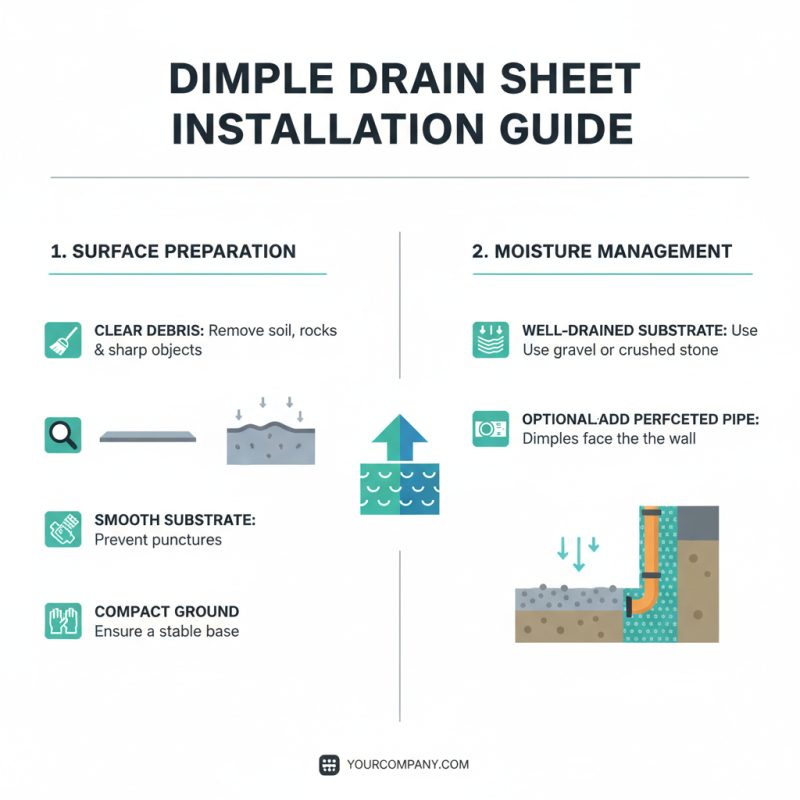
Installing dimple drain sheets requires careful attention to detail. Proper surface preparation is crucial. Ensure the area is free from debris and sharp objects. A clean subsoil helps prevent punctures during installation. Moisture management starts with a well-drained substrate. This might involve adding gravel or crushed stone for better drainage.
When placing the dimple sheets, overlap the seams to prevent water leaks. The dimples should face outward, allowing water to flow properly. Secure the sheets with appropriate fasteners, avoiding loose installation that could lead to future issues. Consider the positioning of the sheets in relation to other drainage components, like pipes and catch basins.
It's also essential to reflect on common mistakes. Over-compacting the soil can hinder drainage. Insufficient overlap at seams may cause water pooling. Regular inspections may reveal areas needing adjustments. Ultimately, effective installation not only involves following guidelines but also learning from past experiences.