How to Choose the Right Textured Geomembrane for Your Project?
Choosing the right textured geomembrane for your project can be challenging. The variety of options available often leaves people confused. Textured geomembranes offer unique benefits in various applications. They provide enhanced friction and stability, making them suitable for slopes and channels. Understanding how to select the best material is essential.
Factors to consider include project requirements, environmental conditions, and soil interaction. Each situation may demand a different type of textured geomembrane. For example, the thickness and surface texture can significantly impact performance. It is crucial to analyze these aspects carefully to avoid costly mistakes.
While there is much information on the subject, not all sources are reliable. You may encounter conflicting advice that complicates decision-making. Reflecting on previous experiences can help shape better choices in the future. It’s important to learn from past projects to improve outcomes in new ones. Selecting the ideal textured geomembrane requires both knowledge and introspection.
Understanding the Basics of Textured Geomembranes in Construction
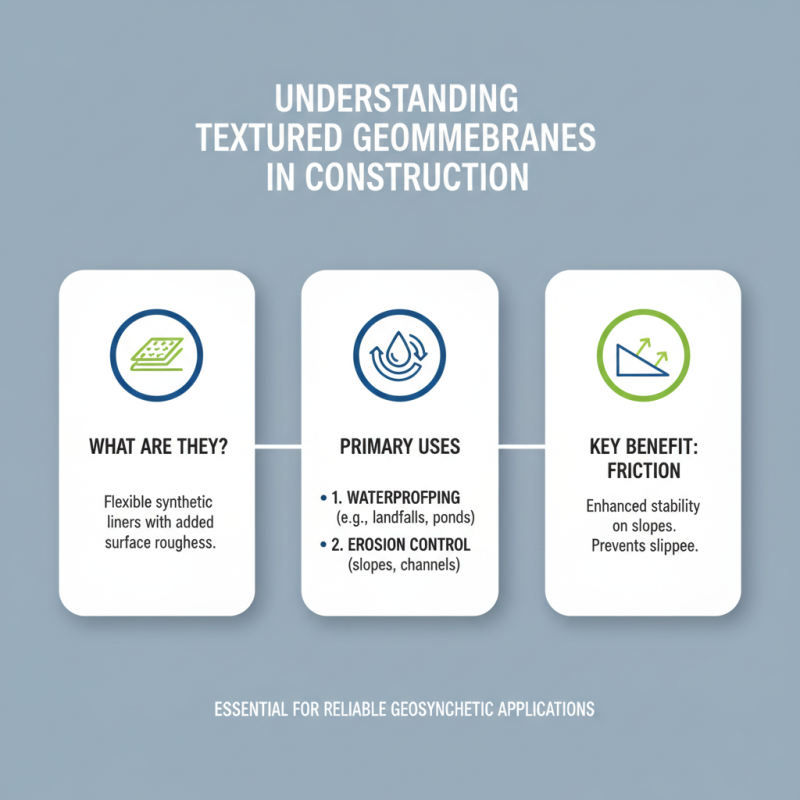
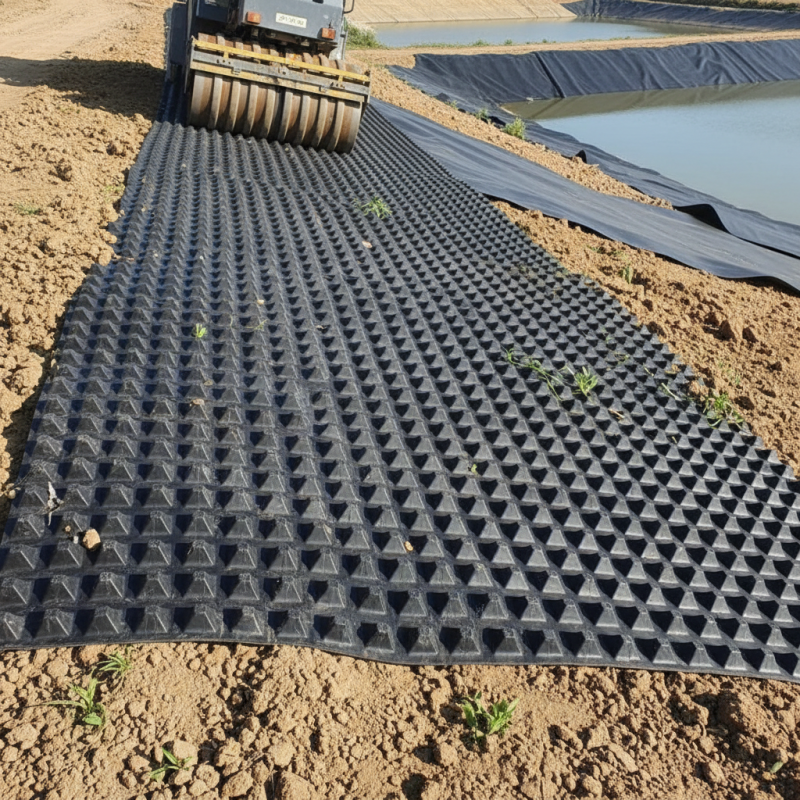
Textured geomembranes play a crucial role in construction projects. They are used for waterproofing and controlling erosion. Understanding their characteristics is essential for effective application. These membranes are often chosen for their added friction. The textured surface helps them stay in place, especially on slopes.
Different projects require different types of geomembranes. For instance, a landfill design might need a thick membrane, while a water reservoir may need something different. Each scenario presents unique challenges that require careful consideration. The texture type can influence the membrane's performance under stress or shifting soil.
However, decision-making can be complex. Not every project needs a textured option. Sometimes, a smooth surface might work better and cost less. It’s essential to evaluate the specific needs before choosing. Asking for professional advice is wise but can feel daunting. Every detail matters, from the thickness to the texture type. Understanding the basics is just the start; the nuances require thoughtful reflection.
Key Factors to Consider When Selecting Textured Geomembranes
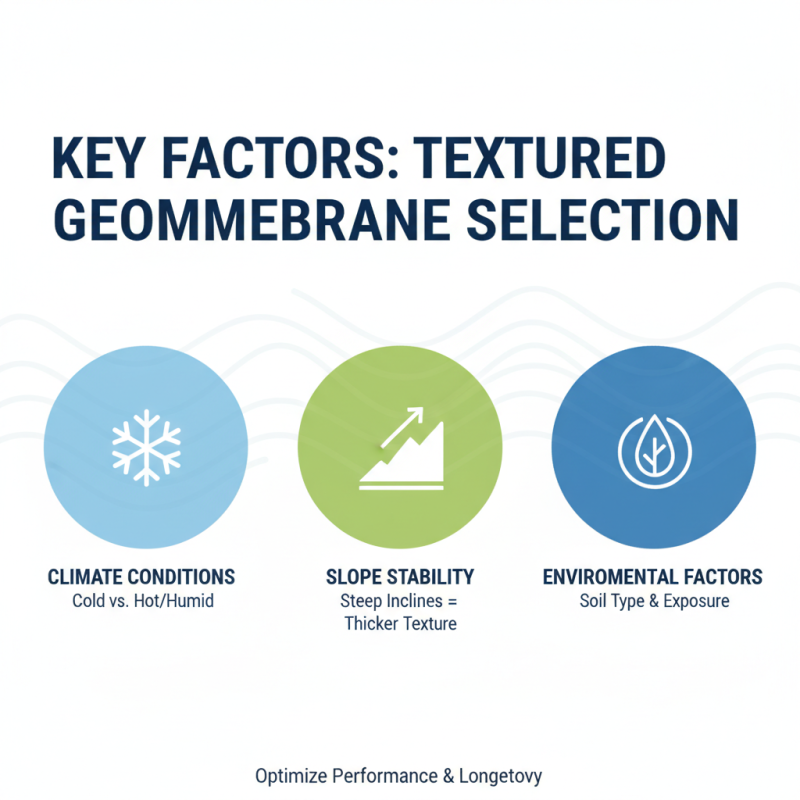
Choosing the right textured geomembrane involves several critical factors. Think about the environment where it will be installed. Different climates can affect performance. For instance, a textured geomembrane in a cold area might behave differently than in hot, humid regions. Analyze the slope of the land as well. Steeper slopes may require a thicker texture for better retention.
Next, consider the chemical resistance needed for your project. Some geomembranes withstand certain chemicals better than others. If hazardous materials are involved, this is essential. Pay attention to the thickness of the geomembrane as well. Thicker isn't always better, but it can offer extra durability.
Performance expectations also matter. How long do you need the geomembrane to last? Some projects might demand shorter life spans, while others require longevity. Don't forget about installation specifics, too. Complex landscapes can lead to installation challenges. You may need more time and resources than you initially thought.
Comparing Textured Geomembrane Materials: HDPE vs. LLDPE
When selecting a textured geomembrane for your project, understanding the differences between
HDPE (High-Density Polyethylene) and
LLDPE (Linear Low-Density Polyethylene)
is crucial. HDPE offers superior chemical resistance and
tensile strength. It typically comes in thicker sheets and is capable of handling extreme conditions. A study
by the Geosynthetics Institute reported that HDPE has a long-term strength retention of around 85%,
making it reliable for heavy-duty applications.
On the other hand, LLDPE provides excellent flexibility
and elongation properties. It adapts to ground movements better than HDPE. Research has shown that LLDPE can
stretch up to 700% before breaking. This feature is beneficial in projects with uneven subgrades.
It’s worth noting that LLDPE is often more cost-effective for large areas, despite having a lower maximum service
temperature compared to HDPE.
Tip: Consider the environmental conditions of your project site before making a choice. For areas
with significant substrate movement, LLDPE might be more suitable.
Tip: Always assess the specific needs of your project. HDPE might be more appropriate for
chemical exposure situations, while LLDPE could save costs in large-scale installations.
The decision is not just about material; it’s about matching each membrane's properties to your project's
unique requirements.
Industry Standards and Certifications for Textured Geomembranes
When selecting textured geomembranes, industry standards and certifications play a crucial role. These criteria ensure that the products meet specific performance requirements. Testing for durability, puncture resistance, and UV stability are common practices. Compliance with these standards helps in evaluating product quality.
Many organizations develop standards for geomembranes. The ASTM International standards are widely recognized. They provide specifications that manufacturers and users can follow. Additionally, certifications from various entities further ensure product reliability. However, not all products comply fully. Some may lack necessary certifications, leading to potential project risks.
Choosing a geomembrane based solely on appearance can be misleading. Basic evaluations may overlook critical factors like environmental resistance. It’s important to delve deeper into certification details. Seek products that have been rigorously tested. Always consider how these materials perform in real-world conditions. The right choice impacts project longevity and success.
Evaluating Project Requirements: Thickness, Grip, and Durability Metrics
Choosing the right textured geomembrane requires a thoughtful evaluation of project requirements. Thickness is critical. A thicker geomembrane may provide enhanced durability, but it can also be heavier and more challenging to handle. Weigh your project's needs against the material's physical demands. A small lapse in assessment might lead to unexpected complications.
Grip is another essential factor. The surface texture influences how well the geomembrane adheres to different substrates. If the grip is inadequate, your project could face failures. Conducting slip resistance tests can provide valuable insight. It’s an aspect that’s often overlooked, yet it can significantly impact performance.
Durability metrics must be scrutinized closely. While some materials boast high resistance to environmental factors, they might still degrade under specific conditions. Take time to explore these possibilities. Engaging with engineers for a comprehensive understanding can help. Misjudging durability could shorten the lifespan of the project. Ensure you consider long-term effects and maintenance.
How to Choose the Right Textured Geomembrane for Your Project?
| Project Requirement |
Dimension |
Metric |
Recommended Value |
| Thickness |
1.0 mm - 3.0 mm |
Minimum Thickness |
2.0 mm |
| Grip |
Surface Texture |
Coefficient of Friction |
> 0.6 |
| Durability |
Long-term Use |
Tensile Strength |
> 20 MPa |
| Environmental Resistance |
Chemical Exposure |
Resistance Rating |
Excellent |
| Installation |
Ease of Handling |
Weight |
Lightweight (Estimate < 1 kg/m²) |